


Views: 0 Author: Site Editor Publish Time: 2026-10-14 Origin: Site


Are modern bathrooms just for washing up anymore? Think about it. You step into a space. The lighting automatically adjusts to your morning routine before you even reach for a towel. These rooms have evolved. They are no longer purely functional utility areas. Today, they are advanced, tech-enabled sanctuaries.
At the heart of this transformation sits the Smart Mirror Cabinet, acting as both a storage solution and a centralized command hub. However, the true luxury of this fixture is dictated by how you interact with it. Traditional analog controls still exist, but modern design standards demand something sleeker. The challenge arises when you realize the sheer volume of options available on the market. Navigating these choices can make the search for the perfect control interface feel overwhelming.
Recent market analyses reveal a definitive shift in bathroom architecture. Homeowners and commercial developers are rapidly abandoning analog fixtures. The current trend heavily favors integrated digital ecosystems. Why? The demand for minimalist, unbroken wall aesthetics is at an all-time high. Furthermore, highly moisture-resistant electronics now integrate seamlessly with broader smart home setups. Capacitive interfaces are no longer a luxury add-on. They are the baseline standard for modern cabinetry.
This comprehensive guide explores the intricate world of modern bathroom controls. From foundational sensors to sophisticated multi-channel systems, you will learn exactly how to match the ideal electronics to your specific lifestyle, budget, and aesthetic vision.
Capacitive Technology: Operating seamlessly behind glass, these sensors offer a sleek, waterproof, and inherently safe control method specifically engineered for wet environments.
Configuration Variety: Interfaces range from minimalist single-button designs to highly advanced multi-channel systems that manage lighting, defogging, and even Bluetooth audio.
Superiority over Alternatives: Compared to clunky mechanical wall plates or overly sensitive motion detectors, capacitive panels provide the optimal balance of targeted control and extended operational lifespan.
Crucial Buying Factors: When evaluating your options, prioritize IP waterproof ratings, electrical load capacity, and structural compatibility with your specific cabinetry.
To make an informed purchasing decision, you need to look behind the glass. How do these modern interfaces actually work? The core mechanism relies on capacitive technology. Mechanical iterations require physical pressure to push a copper contact and close a circuit. In contrast, a capacitive Touch Sensor generates a localized, invisible electrostatic field.
When your finger—which naturally conducts electricity—enters this field, it alters the local capacitance. The microchip detects this minute electrical shift right through the thick dielectric material of the mirror glass. It then signals the internal microcontroller to activate the connected lights or heating pads.
Upgrading to this solid-state technology offers substantial, objective benefits. From a pure safety standpoint, traditional switches pose inherent risks in high-humidity zones due to their exposed electrical contacts. Capacitive modules are entirely sealed behind the glass. This completely eliminates the risk of water ingress right where your wet hands interact with the fixture.
Beyond safety, the aesthetic integration is flawless. Manufacturers laser-etch a crisp icon directly onto the glass, removing the reflective silver backing. They then position an LED-backlit pad directly behind it. Picture walking into a dark bathroom. You easily spot a softly glowing blue icon that guides your hand without blinding you. Having these controls located directly on the reflective surface eliminates the awkward dance of reaching across wet countertops to fumble for a wall plate. This vastly improves your daily ergonomic experience.
When mapping out a bathroom renovation, engineers and homeowners generally evaluate three primary control methods. Analyzing the functional limitations of each reveals exactly why capacitive interfaces have dominated recent design trends.
Feature | Capacitive Panel | Mechanical Wall Switch | Motion Sensor |
|---|---|---|---|
Moisture Resistance | Excellent. Sealed behind glass. | Poor. Exposed contacts risk shorting. | Moderate. Requires specialized housing. |
Aesthetic Integration | Seamless, minimalist design. | Bulky, disrupts tile lines. | Hidden or ceiling-mounted. |
Multi-channel Control | High. Independent relays for light/defog. | Low. Requires multiple gang boxes. | Very Low. Usually triggers a single master circuit. |
Accidental Triggers | None. Requires deliberate touch. | None. Requires physical force. | High. Triggers from hallway movement. |
Familiar and undeniably cheap to replace, mechanical wall plates are the old guard. Yet, they require complex, invasive wall routing and dedicated mains wiring. More importantly, they severely lack smart integration capabilities. If you want to control dimming or activate a defogger, you are forced to install multiple bulky gang switches. This entirely disrupts the clean lines of contemporary tile work.
Infrared or microwave motion sensors offer brilliant hygiene benefits through entirely hands-free operation. Unfortunately, they are frustratingly prone to accidental triggers. Simply walking past an open bathroom door to grab a towel can inadvertently activate the vanity lights. Furthermore, motion sensors typically trigger a single master circuit. This makes it nearly impossible to turn on the anti-fog pad without also blasting the main LED arrays.
Capacitive technology remains the undisputed optimal choice for modern cabinetry. It grants precise, multi-channel command over various integrated features. It boasts a vastly superior lifespan due to the absence of grinding mechanical parts. Ultimately, it maintains a sleek visual profile that older methods simply cannot replicate.
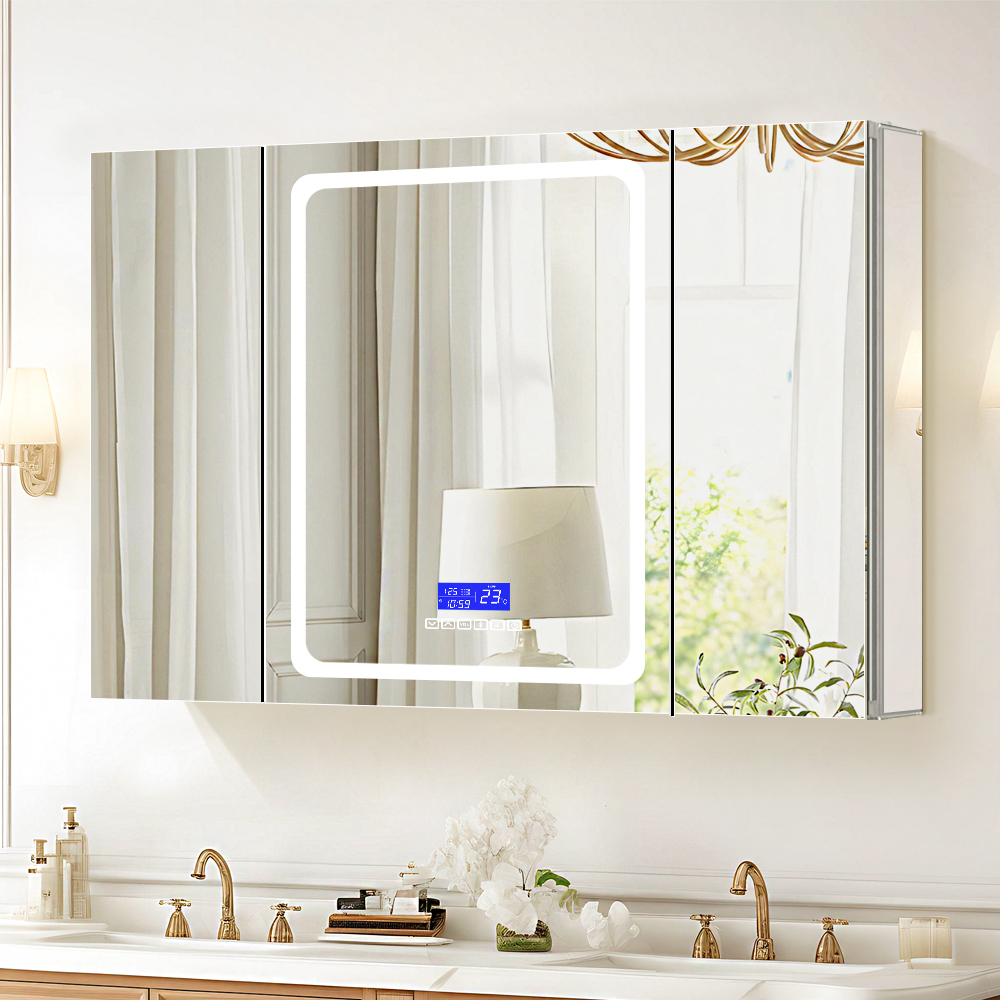
The complexity of your control interface should directly mirror the specific functions hidden within your cabinet. Manufacturers offer a scalable range of configurations to suit everything from tiny powder rooms to sprawling master baths.
Single-Key Configurations:
This foundational setup is best suited for minimalist environments where the fixture only features standard perimeter lighting. A quick tap toggles the main power. However, many modern single-key modules now incorporate a long-press feature. This allows you to fluidly adjust brightness levels without cluttering the glass with secondary buttons.
Double to Triple-Key Panels:
Serving as the gold standard for mid-range setups, this layout divides the electrical load across multiple internal relays. Users gain independent command over specific features. Usually, one icon is dedicated to lighting, handling both dimming and color temperature. A second distinct button controls the PET anti-fog heated pad. A third might trigger ambient under-cabinet backlighting.
The Advanced 6-Key Panel:
For tech enthusiasts and luxury renovators aiming to create a fully immersive environment, the 6-Key Panel represents the absolute pinnacle of bathroom technology. This sophisticated interface utilizes a multi-channel microcontroller. A standard high-end configuration controls main lighting and seamless correlated color temperature shifting from 3000K warm to 6000K cool daylight. It also handles independent defogger activation, digital time and room temperature displays, Bluetooth acoustic transducer pairing, and dedicated low-lumen nightlights.
Selecting the correct internal components ensures long-term reliability. The bathroom is a uniquely hostile environment for electronics. It is characterized by rapid temperature swings and heavy steam. Therefore, prioritizing technical specifications over mere visual appeal is vital.
IP Waterproof Ratings:
Ingress Protection ratings are absolutely non-negotiable. An IP44 rating is the bare minimum, ensuring protection against solid objects and water splashing from any direction. For maximum durability against heavy condensation, an IP65-rated enclosure is strongly advised. This completely dust-tight and jet-water-proof standard prevents moisture from breaching the microchip. Moisture ingress is the leading cause of erratic phantom touches or complete failure.
Backlight Color and Visibility:
Ergonomics play a subtle but critical role in daily satisfaction. High-quality interfaces utilize dual-color LED indicators. They glow a soft blue when the circuit is open, acting as a gentle beacon in the dead of night. Once tapped, the backlight shifts to a crisp white. This provides immediate visual confirmation that the circuit is active and prevents visual discomfort during late-night bathroom visits.
Dimming and Memory Functions:
A non-volatile memory function is a game-changer for daily convenience. This tiny internal chip ensures the microcontroller remembers your exact preferred brightness and warmth settings even after the main power is cut. Without it, the fixture stubbornly defaults to factory settings every single time you turn it on. Getting hit with a blinding 100 percent brightness at a stark 6000K daylight color is incredibly abrasive to sleepy eyes.
Relay vs. Direct Control:
When dealing with advanced setups, the Mirror Cabinet Switch must possess an internal relay capable of handling significant electrical loads. LED strips draw very low amperage. In contrast, a resistive PET heating pad draws substantial wattage. Ensuring the internal relay is rated for a minimum of 5A to 10A prevents the contacts from fusing together under heavy load. This averts catastrophic failure of the control board.
The physical architecture of your cabinetry heavily dictates the type of sensor module you can successfully integrate. A mismatch here can lead to awkward installations or compromised storage space.
Recessed Bathroom Mirror Cabinets:
Designed to sit flush inside the wall cavity, recessed cabinets maximize spatial efficiency. Because depth is at a premium, these designs demand ultra-thin sensor modules. If the plastic housing is too bulky, it will inevitably interfere with internal glass shelving. It might also obstruct the mechanical swing of the door hinges. Slimline capacitive pads, often measuring less than 10mm thick, are essential for these tight tolerances.
Surface-Mounted Aluminum Mirror Cabinets:
Surface-mounted designs offer far more breathing room for internal electronics. When integrating power supplies and relays, thermal management becomes your primary concern. Selecting a premium aluminum chassis provides a distinct structural advantage. The metal frame acts as a highly efficient natural heat sink. It continuously draws thermal energy away from the LED drivers and relays, preventing overheating and dramatically extending the lifespan of the sensitive internal electronics.
Placement Ergonomics:
The physical location of the etched icon must account for user height and door swing mechanics. For single-door cabinets, placing the controls at the bottom corner opposite the hinges is best. This prevents your arm from blocking your own reflection while adjusting the lights. For wide double-door setups, a bottom-center placement on the primary active door ensures symmetrical visual balance and easy ambidextrous access.
Consumers frequently question the longevity of digital controls compared to old-school analog toggles. Empirical data heavily favors solid-state technology.
Mechanical switches rely on physical springs, copper contacts, and plastic levers. These inevitably degrade due to friction and electrical arcing. Conversely, a capacitive Touch Switch operates entirely via solid-state electronics. There are zero moving parts to snap, wear down, or oxidize. A quality sensor is typically rated for upwards of 100,000 to 300,000 touch cycles. For the average household, this easily translates to decades of reliable, friction-free use.
While the sensor pad itself is nearly indestructible under normal use, premature failure is almost exclusively caused by external environmental factors. High humidity, inadequate exhaust fans, and the use of cheap unsealed internal relays are the true culprits. Ensuring the printed circuit board features a conformal coating—a protective chemical glaze that shields circuits from moisture—is vital for maximizing longevity in a damp room.
Before a single tool is lifted, the main electrical breaker supplying power to the bathroom must be completely shut off. Using a reliable non-contact voltage tester to verify the absolute absence of live current is a mandatory safety protocol. Always consult or hire a licensed professional electrician to ensure compliance with local building codes.
The electrical flow of a lighted fixture follows a strict sequence. The high-voltage household AC mains power connects directly to an LED Driver, acting as the power supply. This safely steps the voltage down to a stable 12V or 24V DC. This low-voltage output is then wired into the input terminals of the control relay. From there, the output terminals distribute power to the respective loads, such as the LED light strips and the anti-fog heating pad.
Physical alignment is the secret to flawless capacitive functionality. The sensor must sit completely flush against the rear surface of the glass, directly behind the laser-etched icon. Manufacturers use specialized mounting brackets adhered to the glass with industrial-grade UV glue or high-bond 3M tape. When the module snaps into this bracket, internal springs or conductive foam push the pad firmly against the glass. Even a millimeter of air gap can severely cripple the touch sensitivity, forcing you to press hard rather than tap lightly.
Choosing the right control interface fundamentally upgrades your daily routine. It transforms a basic, utilitarian bathroom fixture into a highly responsive smart hub that caters to your specific needs.
The key is to match the complexity of the technology to your lifestyle. A streamlined dual-switch works perfectly for quick, efficient morning grooming tasks. Meanwhile, an expansive multi-key panel offers the immersive, spa-like experience required for long, relaxing evening routines.
By prioritizing waterproof ratings, smart memory functions, and solid-state durability, you can confidently upgrade your space. Ready to elevate your bathroom design? Explore the full range of premium smart fixtures at Kaitze to find the perfect aluminum cabinetry and control interface for your next project.
Yes, high-quality capacitive sensors are specifically engineered for wet bathroom environments. They operate by detecting the electrical capacitance of your body, and damp skin is actually highly conductive. The sensor will readily register a wet finger through the glass. However, if there is a heavy, continuous stream of water running down the mirror or standing water pooling directly over the sensor, it may confuse the localized electrostatic field. Simply wiping the excess water away instantly restores flawless functionality.
Absolutely. Most modern capacitive interfaces feature stepless dimming capabilities. Instead of a quick tap to turn the power on or off, you simply press and hold your finger over the glowing icon. The internal microcontroller will smoothly ramp the LED brightness up or down. Once you reach your desired lighting level, remove your finger. Premium models with memory chips will remember this exact setting for the next time you use the mirror.
Yes, they are significantly safer than traditional mechanical wall switches. Touch panels operate on low-voltage direct current, typically 12V or 24V, eliminating the risk of high-voltage shocks. Furthermore, the electronic components are housed in IP44 or IP65 rated enclosures and sealed entirely behind the glass dielectric layer. This creates an impenetrable barrier between your wet hands and the internal circuitry.
While technically possible for highly experienced DIY enthusiasts, retrofitting an analog mirror is a complex and hazardous endeavor. It requires removing the heavy glass, safely sandblasting or laser-etching the silver backing to create a light-permeable icon, and correctly wiring low-voltage drivers in a wet zone. Any mistake can shatter the glass or create severe fire hazards. Purchasing a factory-tested, pre-built smart fixture is vastly safer, significantly more reliable, and ultimately more cost-effective.
In consumer marketing, these terms are frequently blended, but technically they refer to different components of the same system. The sensor is the specific electronic pad sitting directly behind the glass that detects the physical proximity of your finger. The switch refers to the entire integrated unit. This includes the sensor pad, the processing microchip, the LED backlight indicators, and the solid-state relay that physically opens and closes the electrical circuit to supply power.
Erratic behavior, such as a rapidly flashing indicator light or a dead panel, is rarely a failure of the capacitive pad itself. Most commonly, this points to a failing power supply. If the LED driver struggles to maintain a stable voltage output, the microcontroller will continuously reset, causing a strobe effect. Alternatively, an unresponsive panel can be caused by a loose internal wire connection or moisture that has breached the protective housing, creating a minor short circuit. Replacing the LED driver is typically the first and most effective troubleshooting step.


