


Views: 0 Author: Site Editor Publish Time: 2026-10-05 Origin: Site


You mount a brand-new vanity fixture, step back, and notice your reflection looks slightly stretched or compressed. The culprit behind this frustrating funhouse effect is rarely the lighting. It usually boils down to one overlooked specification, which is incorrect Glass Thickness. Many homeowners and interior designers focus entirely on frame aesthetics, backlighting, and overall dimensions. Yet, the physical depth of the reflective pane remains the most critical factor for long-term performance. It determines reflection accuracy, longevity, and overall safety in a high-traffic, humid bathroom environment.
In this comprehensive guide, we break down standard sizing options from a field installation perspective. Beyond just listing numbers, we will explore the physics of preventing wall flex, evaluate different edge treatments, and help you select the ideal material for your next bathroom upgrade.
The Industry Standard: The optimal depth for high-quality bathroom installations is typically 5mm or 6mm.
Avoid Thin Materials: Sheets thinner than 4mm are highly prone to bending. This flexing causes distorted reflections when mounted on uneven drywall.
Size Dictates Depth: As the width and height of your fixture increase, the pane must be thicker to prevent warping and maintain structural rigidity.
Processing Matters: Custom edge work like deep beveling structurally demands a thicker pane compared to flat-edged alternatives.
Humidity Resistance: A substantial pane paired with a premium copper-free backing withstands moisture significantly better than budget options.
Specifically, the primary reason depth matters comes down to optical clarity. Standard residential walls constructed from drywall are rarely perfectly flat. They harbor subtle bows, dips, and imperfections across the wooden studs.
When installers press a flimsy, thin sheet against an uneven surface, the material inevitably bows to follow the wall contour. This physical bending alters the angle of light reflection, creating a distorted image. Conversely, a thicker pane possesses inherent tensile strength. It remains perfectly rigid and bridges wall imperfections without bowing, ensuring a true and accurate reflection every single time.
Bathrooms subject interior fixtures to extreme environmental conditions. Rapid temperature fluctuations and heavy moisture exposure put immense stress on fragile materials. Thin sheets are highly susceptible to thermal expansion and contraction. Over time, this constant shifting causes microscopic stress fractures. A thicker pane offers superior structural integrity and expands much more uniformly. This stability protects the delicate silver backing from cracking, preventing steam from seeping in and ruining the reflective coating.
From a practical field perspective, bathrooms experience a surprising amount of physical vibration. Heavy foot traffic, slamming doors, and the hum of exhaust fans send continuous acoustic waves through the wall studs directly into mounted fixtures. Thin materials absorb these physical shocks poorly. They often rattle against the wall, increasing the risk of stress cracks originating from the mounting clips. A heavier pane naturally dampens these acoustic vibrations. It absorbs everyday shocks without transferring destructive energy to its fragile edges, making the installation far safer for busy households.
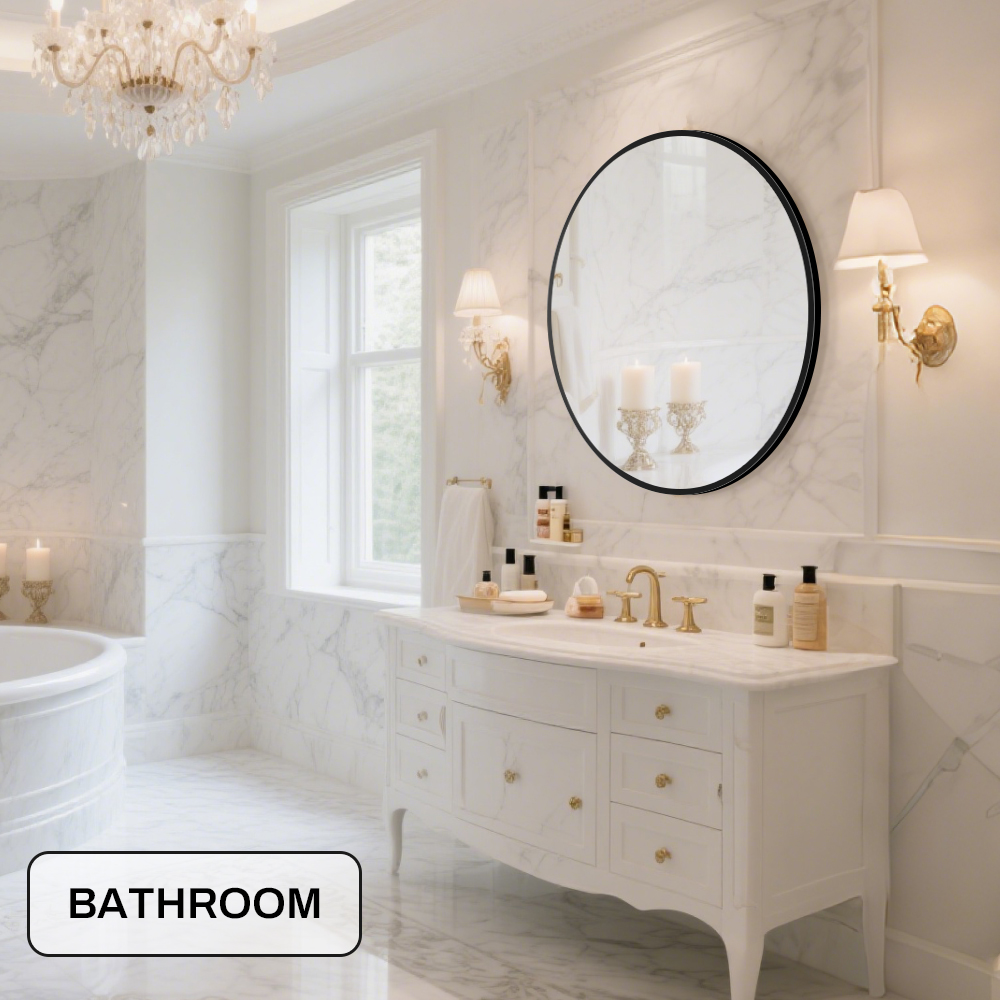
Materials in the 3mm to 4mm range represent the budget tier of the glazing industry. They are lightweight and inexpensive to manufacture. Installers frequently use this size for compact medicine cabinet doors or small, fully framed pieces. In these specific applications, a rigid frame provides the necessary exoskeleton to keep the pane flat. However, you should strictly avoid this depth for sprawling wall installations. Its low mass makes it exceptionally vulnerable to sagging and visual distortion.
For the vast majority of residential applications, a standard 5mm Mirror serves as the ideal baseline. It represents the industry benchmark for high-quality bathroom vanities. This specific depth offers an excellent balance between structural weight, price point, and optical clarity. It is rigid enough to resist bowing over moderate spans above a single-sink vanity. Furthermore, it remains light enough for straightforward installation using standard mastic and heavy-duty clips.
Luxury spaces demand the 6mm option. This robust material offers unmatched structural rigidity. Commercial restrooms, boutique hotels, and luxury residential builds rely exclusively on this size to guarantee a perfectly flat reflective surface. While it carries a heavier weight and a slightly higher price tag, the flawless optical perfection it delivers is undeniable.
Thickness Option | Common Application | Warping Risk | Relative Weight per Sq Ft | Max Recommended Span |
|---|---|---|---|---|
3mm - 4mm | Medicine cabinets, small framed frames | High on large spans | ~1.6 - 2.0 lbs | Under 24 inches |
5mm | Standard single or double vanities | Low | ~2.4 lbs | Up to 48 inches |
6mm | Oversized walls, luxury frameless, beveled | Zero | ~3.2 lbs | Unlimited with proper support |
There is a direct, unavoidable correlation between the surface area of your fixture and the required structural support. As a general field rule, any piece wider than 36 inches or designed to span a large double vanity must utilize a 5mm or 6mm Mirror to maintain its integrity. Attempting to cover a massive distance with a thin sheet removes its ability to support its own weight uniformly. The center will inevitably sag inward or bow outward.
The presence of a surrounding frame significantly alters the structural dynamics of the installation. A sturdy powder-coated iron or wooden border acts as a reinforcing exoskeleton. This adds crucial rigidity to thinner panes and keeps them relatively flat. In contrast, modern bathrooms frequently feature sleek, frameless designs. Because they lack perimeter reinforcement, frameless installations rely entirely on their internal mass for support. Consequently, frameless designs should always default to thicker materials to ensure absolute safety.
A standard Plain Mirror features clean, flat, and polished edges. This offers a sleek aesthetic that fits seamlessly into contemporary spaces. Because the edge profile is not deeply ground down, the structural integrity remains consistent across the entire pane. Depending on the overall square footage, a plain design can safely utilize a 5mm depth. The uniform strength makes it a highly versatile and cost-effective choice.
Beveling is a decorative manufacturing process that grinds down perimeter edges at an angle, creating an elegant framed look using the material itself. However, this grinding process removes a significant portion of structural mass. To achieve a deep, luxurious bevel without making the remaining edge dangerously fragile, a 6mm depth is structurally mandatory. Attempting a wide bevel on a thin sheet compromises edge integrity, making it highly susceptible to chipping or shattering during routine cleaning.
Physical depth provides the necessary structural canvas, but the glass itself is completely transparent. The actual reflective magic comes from a microscopic metallic coating applied to the back. High-definition Mirror Glass utilizes an advanced copper-free silvering process. This modern manufacturing technique yields a brighter, more accurate reflection than older aluminum-based methods. It also remains significantly more environmentally friendly by eliminating toxic byproducts.
Moisture is the ultimate enemy of that delicate silver coating. When bathroom humidity penetrates the silver layer, it triggers rapid oxidation. This results in ugly black spots creeping inward from the edges. To combat this, premium manufacturers pair their thick structural panes with double-coated waterproof backing paint. This heavy-duty sealant completely encapsulates the silvering, preventing steam and condensation from causing irreversible damage.
Analyzing recent interior design trends reveals a massive shift toward oversized, frameless, and LED-backlit vanity setups. Homeowners increasingly demand spa-like, wall-to-wall reflective surfaces. Consequently, the glazing industry has adapted its manufacturing standards. Market data shows a sharp decline in the use of 3mm and 4mm materials for residential bathrooms. The rising popularity of integrated lighting requires sandblasting the edges to allow light transmission, a process that inherently weakens the pane. As a result, commercial installers and manufacturers now establish 5mm and 6mm thicknesses as the non-negotiable baseline. This ensures modern, tech-integrated fixtures remain structurally sound and visually flawless over decades of use.
Upgrading to a premium depth means dealing with significantly heavier materials. You must calculate the total weight during the planning phase to ensure your wall studs can support the load. For reference, a 5mm pane weighs approximately 2.4 pounds per square foot, while a 6mm pane weighs roughly 3.2 pounds per square foot. A large 60-inch by 36-inch vanity piece can easily weigh over 50 pounds. Relying on basic drywall anchors for this massive load is a recipe for disaster.
Heavy installations demand professional-grade mounting solutions. You should never rely solely on adhesive to hold thick panes against a wall. The most secure method combines mechanical support with specialized non-acidic mirror mastic. When applying mastic, use golf-ball-sized dollops spaced evenly across the back. Avoid continuous snake patterns, as dollops allow air circulation for proper curing. Crucially, support the bottom edge with a metal J-channel or heavy-duty clips screwed directly into the studs. The mechanical channel bears the sheer downward weight, while the mastic keeps the pane perfectly flat against the drywall.
Measure the Vanity Space
Accurate measurements form the foundation of a successful upgrade. Determine the exact width and height of the wall area you intend to cover. This total square footage directly dictates the minimum required thickness to prevent long-term flexing.
Choose Your Edge Style
Decide between a modern aesthetic with flat polished edges or a traditional look with beveled borders. If your heart is set on deep bevels, factor the cost of thicker glass into your budget. Grinding edges requires extra mass for structural safety.
Select the Right Depth
Use your measurements and style preferences to finalize your choice. Opt for a 5mm thickness for medium-sized residential spaces to balance cost and clarity. Upgrade to a 6mm thickness for oversized walls, frameless designs, or luxury bathroom renovations to guarantee zero distortion.
Verify Quality Standards
Never finalize a purchase based on thickness alone. Always check manufacturer specifications to ensure the product features copper-free silvering and a moisture-resistant, multi-layer painted backing. This attention to detail extends the lifespan of your investment by decades.
You might be tempted to save a few dollars upfront by purchasing a thinner sheet. However, investing in the proper structural depth saves you from warped reflections, acoustic rattling, and severe moisture damage down the road. The physics are simple. A rigid pane provides a pristine reflection, while a flimsy one conforms to every hidden flaw in your wall.
For the absolute best visual clarity and longevity in a damp setting, a 5mm or 6mm option remains the ultimate choice. Are you ready to elevate your daily routine and upgrade your bathroom? Explore high-quality plain mirror options crafted to the perfect thickness. Discover premium designs at Kaitze to ensure a flawless, distortion-free reflection for years to come.
Generally, no. While a 3mm sheet functions adequately for very small, fully framed medicine cabinets, it is far too thin for standard vanity applications. It will likely warp, bend, or even crack in a high-traffic, humid environment, resulting in a frustratingly distorted reflection.
The most effective way to prevent flexing is to increase the material depth before installation. Upgrading to a 6mm pane provides the immense structural rigidity needed to lay perfectly flat against uneven drywall, completely eliminating the funhouse effect.
The reflective product begins its life as standard high-quality float glass, usually featuring a low-iron composition to ensure maximum optical clarity. It then undergoes a highly specific manufacturing process where a liquid silver layer and protective waterproof backing paints are permanently bonded to one side, transforming it into a reflective surface.
Yes, a plain design with flat, polished edges is one of the most popular, modern, and cost-effective choices for a vanity. Just ensure the material is at least 5mm thick for optimal durability, safety, and reflection quality over a wide sink area.
A standard 6mm pane weighs approximately 3.2 pounds per square foot. Because of this substantial weight, you must strictly avoid standard drywall anchors. Instead, utilize appropriate heavy-duty mounting hardware, stud-mounted J-channels, and professional non-acidic adhesive during installation.
Absolutely. Thicker materials possess higher tensile strength, meaning they resist bending when mounted against uneven walls. By remaining perfectly flat, a thicker pane ensures light reflects at precise angles, delivering a highly accurate, distortion-free image.
You must locate the wooden or metal studs behind your drywall. Heavy panes should never hang from drywall alone. As long as your J-channels or heavy-duty mounting clips are securely anchored directly into the wall studs, standard residential framing will easily support the weight of a 6mm installation.


