


Views: 0 Author: Site Editor Publish Time: 2026-10-22 Origin: Site


Picture this familiar, frustrating morning routine. You step out of a beautifully hot, relaxing shower, ready to shave or apply your skincare. You look up, only to find the bathroom glass completely obscured by a thick layer of white condensation. Frantically wiping it with a bath towel only leaves behind a mess of lint, streaks, and chemical residue.
An anti-fog mirror elegantly solves this daily annoyance. It offers a pristine, steam-free reflection on demand. Yet, despite the undeniable appeal of this luxury hotel feature, many homeowners hesitate before making the upgrade. A lingering worry persists regarding hidden electricity costs. People often assume that generating heat requires massive amounts of power.
In this comprehensive guide, we will dismantle those assumptions from a practical engineering perspective. You will discover exactly how much power these modern fixtures truly consume. Furthermore, we will show you how to calculate the precise monthly impact on your utility bill and explore the straightforward electrical requirements for residential installation. By the end, you will understand why upgrading to a moisture-resistant fixture is one of the smartest investments for your bathroom.
Remarkably Low Power Draw: Most standard-sized condensation-free units consume between 15 to 50 watts of power. This is strictly less than what a single traditional incandescent light bulb requires.
Pennies per Month: Operating a heating pad for one hour daily typically costs less than one dollar per month. This cements it as a highly energy-efficient residential upgrade.
Combined Efficiency: Modern dual-purpose units decouple the lighting and heating circuits. This ensures you only consume electrical power for defogging when you actively require a clear surface.
Simple Installation: In the vast majority of household setups, a heated glass fixture does not demand a dedicated 20-amp circuit. It safely and easily integrates into existing bathroom lighting lines.
High Return on Investment: Actively preventing moisture buildup extends the physical lifespan of the glass. This effectively mitigates long-term silvering degradation and protects your walls from water damage.
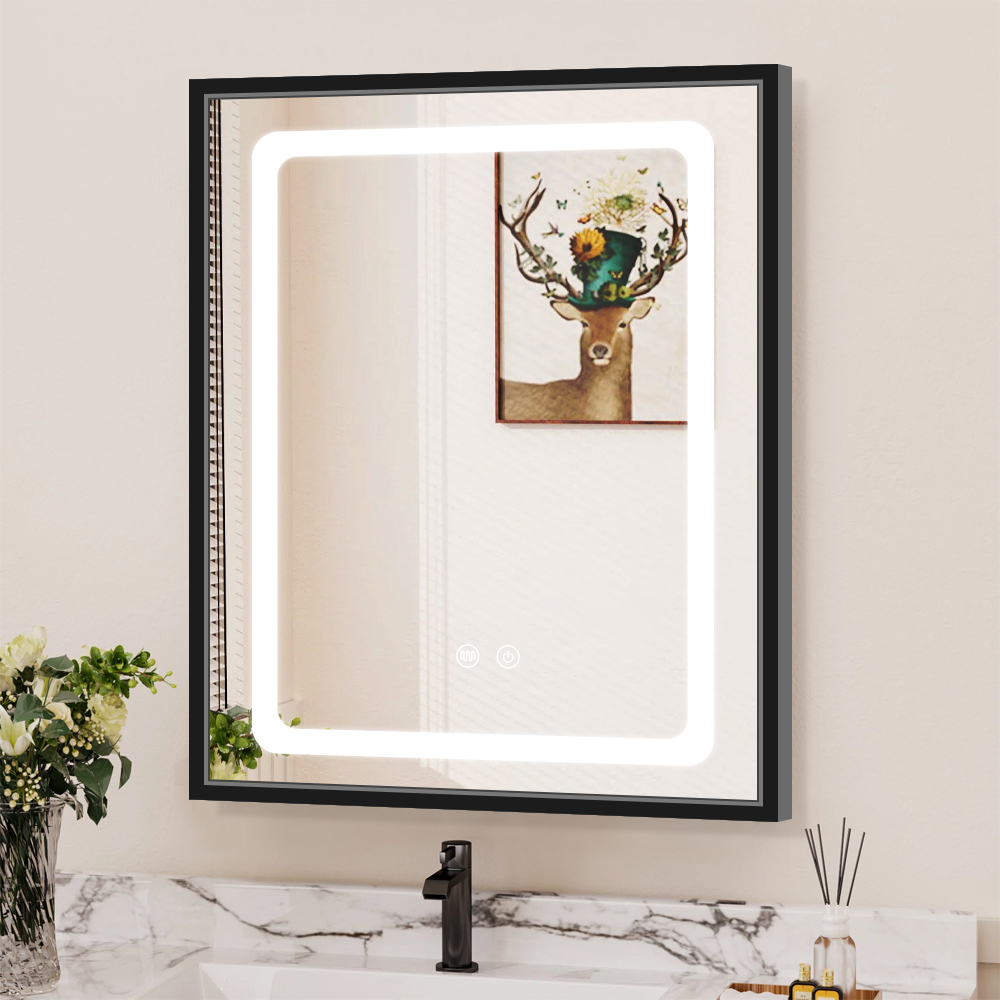
To accurately evaluate energy consumption, you must first understand the fundamental mechanics operating behind the glass. At its core, this fixture is a standard reflective surface equipped with a specialized, ultra-thin heating mechanism designed to manipulate surface temperatures.
Bathroom mirrors fog up due to a basic thermodynamic process. When you take a hot shower, the ambient air fills with warm, moisture-laden water vapor. As this humid air circulates and makes contact with the cold surface of the glass, it rapidly cools. Once the air temperature drops below its dew point, the moisture transitions from a gas back into a liquid state. This leaves a layer of microscopic water droplets that completely obscure your view.
The technology prevents this physical reaction through the application of gentle, targeted warmth. A thin, electrically conductive heating pad is permanently adhered to the reverse side of the glass. Constructed from durable PET film embedded with highly efficient resistive heating wires, this pad generates a controlled amount of thermal energy when activated.
A common misconception is that these appliances function similarly to heavy-duty space heaters. In reality, the engineering is highly conservative. The pad is calibrated to warm the glass slightly above room temperature, usually stabilizing around 104 degrees Fahrenheit. This specific thermal threshold is entirely safe to the touch, poses no burn hazard, and is perfectly suited for operation within high-moisture wet zones.
The exact power consumption depends entirely on the physical dimensions of the heating element installed behind the glass. Because the system only needs to warm the central viewing area rather than the extreme edges of the fixture, the pad is usually much smaller than the total mirror size.
To provide an objective, actionable standard for your renovation, we can categorize the average power draw based on standard residential dimensions. The wattage represents the rate at which the defogger consumes electrical energy when actively turned on. When sourcing high-quality fixtures, you will notice specific technical parameters that guarantee efficiency.
Vanity Application | Standard Glass Dimensions | Heating Pad Specs | Average Power Draw | Typical IP Rating |
|---|---|---|---|---|
Small Single Sink | 20 by 28 inches | 12 by 16 inches | 15W to 25W | IP44 / IP54 |
Standard Vanity | 24 by 36 inches | 16 by 24 inches | 30W to 50W | IP44 / IP54 |
Large Double Vanity | 48 by 36 inches | 20 by 32 inches | 60W to 80W | IP44 / IP54 |
To truly grasp how minimal this energy footprint is, consider the appliances you use daily. A single older incandescent vanity bulb draws 60 watts. A standard residential bathroom ventilation fan typically consumes between 70 to 90 watts. Consequently, running a medium-sized heating pad uses less electricity than simply leaving one traditional light bulb switched on.
Furthermore, this is not an appliance that runs twenty-four hours a day. The electrical resistance generates heat almost immediately upon activation. It generally takes only three to five minutes for the central area of the glass to clear completely. Therefore, the device only draws its rated wattage for the brief duration of your shower and grooming routine.
While knowing the wattage provides a solid baseline, calculating the actual financial impact on your monthly utility bill requires a simple mathematical formula. Electricity is billed by the kilowatt-hour. This represents the amount of energy required to run a 1000-watt appliance for one hour.
Let us apply this formula to a highly realistic, everyday scenario for a single-user household. Assume you install a medium-sized mirror featuring a 50-watt pad. You turn it on for exactly one hour per day, covering a long shower and subsequent grooming time. If you pay the United States national average electricity rate of roughly 16 cents per kilowatt-hour, the math breaks down as follows.
Convert watts to kilowatts: 50W divided by 1000 equals 0.05 kilowatts.
Calculate daily energy usage: 0.05 kilowatts multiplied by 1 hour equals 0.05 kilowatt-hours per day.
Calculate daily cost: 0.05 kilowatt-hours multiplied by 16 cents equals less than one penny per day.
Calculate monthly cost: Under one penny multiplied by 30 days equals roughly 24 cents per month.
Even in a demanding scenario, such as a family of four taking sequential showers and requiring the unit to remain active for two full hours every single day, the monthly cost barely reaches 50 cents. This quantitative data thoroughly debunks the myth that heated bathroom fixtures cause utility bills to spike.
When analyzing the broader home improvement market, it becomes clear that consumer anxieties regarding power consumption are actively shaping manufacturing trends. In recent years, the bathroom fixture industry has experienced a massive shift toward eco-conscious, smart home integrations. Market data indicates that today's homeowners refuse to compromise between luxury and sustainability.
In response, engineers have developed ultra-efficient conductive heating films that require significantly less electricity than the bulky, wire-based models of the past decade. The industry is rapidly adopting low-voltage direct current systems that pair perfectly with energy-saving smart relays. Modern regulatory landscapes and rigorous green building certifications are continuously pushing the baseline for energy efficiency higher.
As a result, contemporary bathroom fixtures are meticulously engineered to deliver rapid, reliable defogging capabilities while maintaining a virtually invisible carbon footprint. This evolution reflects a larger industry commitment to environmentally responsible, intelligent home design that prioritizes long-term resource conservation.
When consumers research this technology, they frequently encounter fixtures that combine multiple features. Most modern iterations are actually dual-purpose units. By upgrading to an LED bathroom mirror, homeowners receive both high-efficiency illumination and integrated heating capabilities within a single, streamlined chassis.
The lighting components in these modern fixtures utilize Surface-Mounted Device LED strips, renowned for their exceptional energy conversion rates. Unlike incandescent bulbs that waste up to 90 percent of their energy as ambient heat, LEDs convert almost all their drawn electricity directly into visible light. A large, brightly lit mirror might only consume 20 to 30 watts for the lighting system. Therefore, even when running both the lights and a 50-watt heating pad simultaneously, the total power draw rarely exceeds 80 watts.
Particularly important is the implementation of independent control circuits. High-quality models separate the operational logic of the lights from the heating pad. If you are simply washing your hands or applying makeup at the sink without running the shower, you can activate the illumination independently. Because the heating element remains off, you are not wasting electricity on a surface that is not at risk of fogging.
A prevalent concern among DIY enthusiasts is the electrical infrastructure required to support a heated fixture. Because the appliance involves heating elements and operates in a high-moisture environment, many mistakenly assume it requires heavy-duty wiring or a dedicated 20-amp circuit breaker.
From an electrical engineering standpoint, this assumption is incorrect. The necessity of a dedicated circuit is dictated by the total amperage an appliance draws. If a standard medium-sized unit draws 50 watts of power on a 120-volt North American electrical system, the current draw is exceedingly low, pulling roughly 0.41 amps.
A standard residential bathroom lighting circuit is typically rated for 15 amps. Adding a fixture that pulls less than half an amp will not overload the circuit, nor will it trip the breaker under normal circumstances. Because the power consumption is so minimal, professional electricians can usually splice the fixture directly into the existing lighting circuit. They often route it through an existing Ground Fault Circuit Interrupter protected line for maximum safety.
While the electrical load is light, the installation environment remains highly sensitive. Homeowners are strongly advised to hire a certified, licensed electrician to perform the hardwiring, ensuring all connections are properly insulated and comply with local municipal building codes.
Even though the baseline operating costs are incredibly low, there are several strategic ways to further optimize your energy usage. By implementing smart controls and mindful habits, you can guarantee that your heated mirror operates at peak efficiency.
One of the most effective methods for passive energy management is strategic hardwiring. During installation, you can request that your electrician wire the relay directly to the primary bathroom exhaust fan switch. In this configuration, the pad only receives power when the exhaust fan is actively venting steam. The glass will automatically clear itself precisely when condensation is forming, and turn off the moment you leave the room.
Additionally, many high-end fixtures feature integrated digital timers designed to prevent accidental continuous power draw. If a user forgets to turn off the heating function after their morning routine, an auto-shutoff mechanism will intervene, severing power after 30 to 60 minutes. Advancements in capacitive touch technology also allow for manual, intuitive control. Illuminated touch-sensitive buttons etched directly into the glass detect the electrical capacitance of a human finger, allowing you to easily toggle the heat on or off even with wet hands.
When evaluating any bathroom upgrade, homeowners must carefully weigh the initial purchase price against the long-term utility of the product. An objective, empirical analysis reveals that a high-quality demister mirror provides substantial functional and financial returns over its operational lifespan.
Feature Category | Pros of the Upgrade | Potential Drawbacks |
|---|---|---|
Daily Convenience | Saves significant time during morning routines. Eliminates the daily need to manually wipe the glass. | Requires manual activation if the unit is not directly hardwired to a primary room switch. |
Surface Maintenance | Prevents streaks, smudges, and lint left by towels. Keeps the reflective surface pristine. | The glass still requires standard routine cleaning to remove toothpaste splatters or dust. |
Operating Costs | Incredibly low running cost, usually consuming between 15 and 50 watts. | Carries a higher upfront purchase price compared to standard, non-electronic glass fixtures. |
Product Longevity | Prevents mold buildup behind the fixture. Actively extends the overall structural lifespan of the glass. | Internal electrical components may eventually require professional replacement after many years. |
One of the most frequently overlooked financial benefits is the direct impact on the physical lifespan of the fixture itself. Standard bathroom mirrors are highly susceptible to an irreversible chemical degradation process known as desilvering, often referred to as black edge. This occurs when constant exposure to heavy condensation penetrates the protective backing, reacting with the silver nitrate coating. Over time, the edges turn black and flake away.
By raising the surface temperature above the room's dew point, the heating element actively prevents moisture from pooling along vulnerable outer edges. This thermal barrier against condensation significantly extends the lifespan of the product. When factoring in the compounding cost of replacing a moisture-damaged standard mirror every few years, the initial investment in a heated upgrade becomes highly logical.
An anti-fog mirror is a highly efficient, meticulously engineered appliance that seamlessly blends luxury with practicality. Costing less than one dollar a month to operate, it allows you to enjoy a crystal-clear, steam-free reflection daily without the anxiety of spiking your household utility bills.
The integration of modern manufacturing technology has transformed these electronic fixtures from niche luxury items into highly accessible daily upgrades. They protect your walls from moisture damage, extend the physical life of your glass, and streamline chaotic morning routines.
If you are planning a comprehensive renovation or simply looking to upgrade your daily routine, exploring modern fixtures with built-in defoggers is highly recommended. To elevate your space with spa-like convenience and cutting-edge energy efficiency, explore the premium selection of smart bathroom solutions at Kaitze, where you can find the perfect product tailored to your specific design needs.
While modern heated mirrors are engineered with strict safety standards and will not overheat, leaving them powered on continuously is highly discouraged. Running the unit twenty-four hours a day is an unnecessary drain on your household electricity. Continuous operation can also artificially accelerate the physical wear and tear on the internal electrical components, potentially burning out the capacitive touch sensors or the heating elements prematurely. Always treat it like a standard appliance. Turn it on before your shower, and manually turn it off when you leave the room.
No, they do not. A common misconception is that generating physical heat must consume massive amounts of electricity. However, the specialized heating pads utilized in these fixtures are incredibly thin and highly efficient. Most standard-sized units draw between 15 and 50 watts of power during active operation. This is less than a traditional 60-watt incandescent light bulb. Running the heating element for one full hour every single day will typically cost you less than one dollar per month.
The physical activation time is remarkably fast. Generally speaking, a high-quality unit will begin to completely clear the central viewing area of the glass within three to five minutes of being turned on. Because the electrical heating pad is applied directly to the back of the conductive glass, the thermal transfer process is highly efficient. For the absolute best results, activate the touch sensor or wall switch right before you turn on the shower water.
Yes, you can rest assured that modern heating elements are specifically engineered, heavily insulated, and rigorously tested for wet conditions. They are fully sealed and enclosed, preventing ambient moisture or direct water splashes from reaching sensitive internal wiring. Most reputable products carry strict Ingress Protection ratings, such as IP44 or IP54, certifying their resistance to water intrusion. Furthermore, the pads operate at a very low voltage, drastically reducing any potential risk of electrical shock.
It is technically possible to retrofit your current bathroom setup by purchasing an aftermarket heating pad designed to stick directly onto the back of your existing glass. However, this DIY route comes with significant logistical challenges. You must safely remove your current mirror from the wall, route entirely new electrical wiring behind the drywall, and ensure the pad is properly sealed in a designated wet zone. Because of these labor-intensive steps, upgrading to a brand-new, factory-assembled unit is often far more cost-effective and visually appealing.
Yes, they are highly effective at preventing mirror desilvering, commonly known as black edge. Desilvering occurs when persistent moisture and condensation seep behind the glass, reacting with the silver nitrate backing. By gently heating the glass above the room's dew point, the defogger prevents condensation from forming and pooling along the edges. This keeps the backing dry and significantly extends the pristine lifespan of your fixture.
Absolutely. In fact, a heavily ventilated bathroom makes the heating pad's job even easier. While a strong exhaust fan pulls the majority of the ambient steam out of the room, residual humidity can still cause the cold glass to fog. The anti-fog mirror works independently of room size by directly warming the glass surface. As long as the glass temperature remains higher than the dew point of whatever humid air is left in the room, your reflection will remain perfectly clear.


