

Views: 0 Author: Site Editor Publish Time: 2026-06-25 Origin: Site


High-humidity environments rapidly expose the flaws inherent in standard bathroom storage. Wood warps quickly under constant moisture. Particleboard swells when exposed to steam. Steel rusts visibly over time. Homeowners and contractors face a difficult choice when finalizing a remodel. You must balance aesthetic minimalism against functional storage capacity. Small bathrooms amplify this specific challenge significantly. Standard fixtures rarely offer enough room for your daily essentials.
A well-designed bathroom requires durable, reliable materials. Steam from daily showers constantly attacks inferior cabinet frames. Upgrading your storage fundamentally changes how your bathroom operates. We will evaluate how transitioning to an Aluminum Mirror Cabinet addresses traditional storage pain points. This modern upgrade provides exceptional moisture resistance. It offers superior structural efficiency for tight layouts. You will discover how configurable interiors transform your daily morning routine.
Moisture Immunity: Anodized aluminum eliminates the warping and rust issues common in wood and steel cabinets, ensuring long-term structural integrity.
Space Maximization: The high strength-to-weight ratio of aluminum allows for thinner frames, increasing usable interior volume without expanding the cabinet's footprint.
Mounting Flexibility: Aluminum frames safely support both surface-mount and recessed installations, adapting to varying wall depths and plumbing constraints.
Future-Proofing: Copper-free glass and adjustable interior shelving provide customizable, scalable storage that adapts to changing household needs.
Steam and poor ventilation destroy standard materials quickly. Bathrooms experience intense relative humidity fluctuations daily. MDF and particleboard degrade rapidly under these harsh conditions. These engineered woods contain cellulose fibers. Cellulose absorbs airborne moisture like a sponge. Steam penetrates the thin exterior laminate easily. It dissolves the underlying industrial glues holding the board together. You will see structural failure within a three-to-five-year lifecycle. Edges swell noticeably. Veneers peel away from the core base. Standard steel suffers a similar fate in wet zones. Surface condensation eventually breaches cheap powder-coated paint. This moisture intrusion causes visible, aggressive rust.
Pedestal sinks and shallow vanities offer very clean aesthetics. However, they lack adequate interior space. This severe limitation drives daily clutter onto your countertops. You need multiple skincare products every morning. Leaving these items out creates visual chaos. This clutter causes daily stress for users. Homeowners urgently need vertical, eye-level storage solutions. You must keep daily items accessible but neatly hidden away.
Historically, interior designers avoided bulky medicine cabinets completely. Older models feature thick, unattractive wooden borders. They protrude heavily into the limited room space. This bulk visually shrinks small bathrooms. It creates an uncomfortable, cramped feeling. Designers face a persistent dilemma here. They must provide adequate storage for the client. They also want to maintain a sleek, minimalist aesthetic.
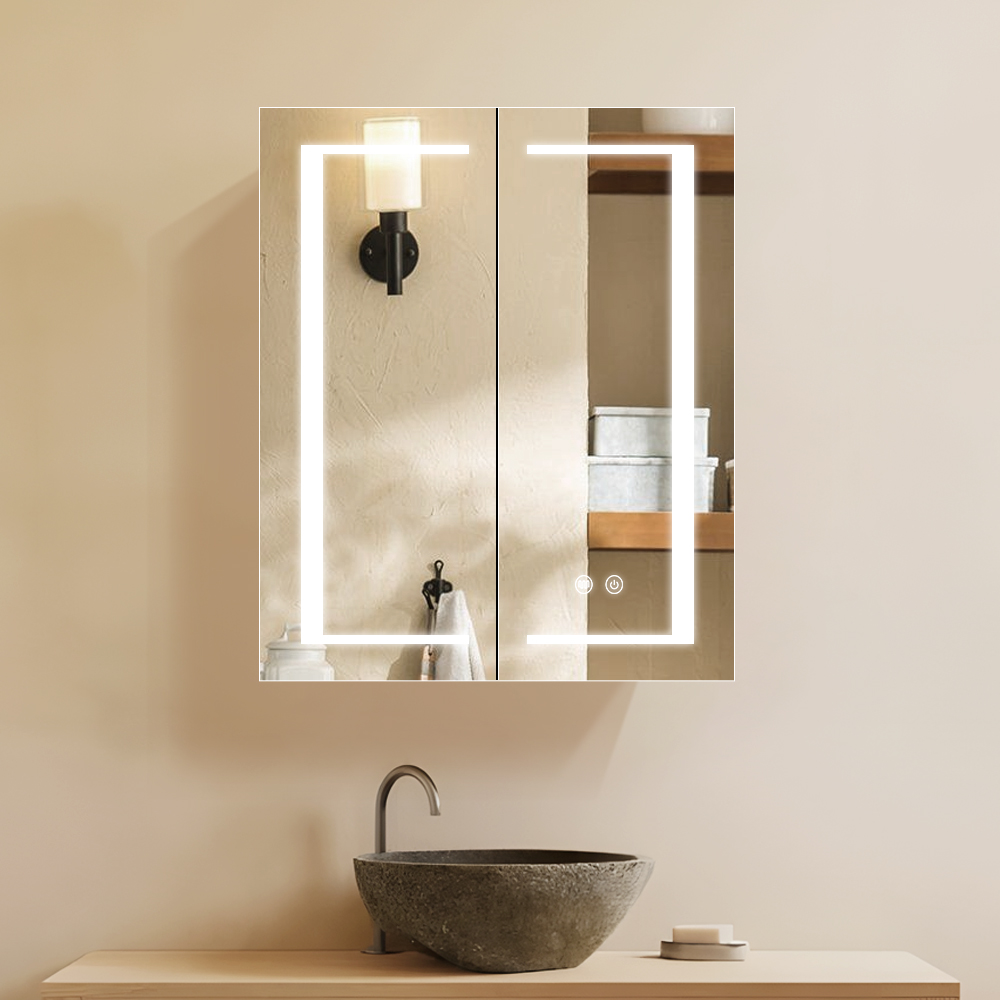
Aluminum boasts a high strength-to-weight ratio. This aerospace-grade characteristic allows for ultra-thin side panels. A standard wooden frame requires thick side walls for basic stability. Wood panels often measure three-quarters of an inch thick. An extruded aluminum frame requires only a fraction of this thickness. You gain significantly more interior space. A Bathroom Storage Aluminum Cabinet yields up to 15% more usable cubic volume. It achieves this compared to wood frames sharing the exact same exterior dimensions. You maximize your storage capacity entirely. You never expand the cabinet footprint.
Continuously adjustable glass shelving represents a crucial design feature. Fixed shelves waste valuable vertical space inside your cabinet. You own items of wildly varying heights. You need room for tall electric toothbrushes. You also have tiny, shallow skincare jars.
Continuous track systems allow millimeter-perfect shelf placement.
Users can modify shelf heights as their product needs change.
Tempered glass shelves support heavy liquid bottles safely.
Transparent glass allows ambient light to reach the bottom shelf.
Modern models feature clever hidden organization systems. Manufacturers install mirrored interior back panels. They also place mirrors on the interior doors. This dual-mirror design changes your daily experience entirely. You open the door to grab a specific product. You can still see your reflection clearly inside. You apply your skincare products directly. You never need to repeatedly open and close the door. This seamless access streamlines your morning routine significantly.
Anodizing provides superior corrosion resistance in permanently wet environments. It is a highly specialized electrochemical process. Anodizing actually changes the microscopic texture of the aluminum surface. It forces the metal to grow a protective oxide layer. This layer integrates directly into the base metal itself. It cannot peel off over time. Powder-coated steel relies on surface-level paint instead. Paint sits on top of the metal. Scratches easily compromise this painted barrier. Water enters through these tiny chips. The steel underneath inevitably rusts.
Engineered wood fails frequently in bathroom environments. Aluminum provides a stark, reliable contrast. Aluminum ignores high humidity entirely. Water exposure cannot warp an aluminum frame. You can splash water directly onto the chassis. It will never swell or lose its precise shape. Aluminum acts as an inorganic material. It will not harbor dangerous mold growth. Wood fibers feed mold spores in damp, dark corners. An aluminum cabinet guarantees a hygienic storage environment.
We must evaluate the physical lifecycle of these different materials. High-quality aluminum units require a specific upfront investment. Cheaper alternatives look appealing initially. However, engineered wood demands frequent, frustrating replacement. You must rebuild your storage setup every few years. An anodized frame eliminates these repetitive replacement cycles. You install the unit once. It maintains its structural integrity for decades.
Material Substrate | Moisture Resistance | Structural Lifespan | Mold Susceptibility |
|---|---|---|---|
Anodized Aluminum | Excellent | 20+ Years | None (Inorganic) |
Powder-Coated Steel | Moderate | 5-10 Years | None |
Particleboard / MDF | Poor | 3-5 Years | High |
Solid Wood | Moderate | 7-12 Years | Medium |
Recessed installation provides a seamless, flush-to-wall aesthetic. Designers prefer this method for high-end residential remodels. The cabinet body disappears completely into the wall cavity. Only the mirrored door remains visible. This approach maximizes space-saving benefits for tight bathroom layouts. You gain deep storage without sacrificing any room volume. However, recessed installation presents specific structural challenges. You must navigate complex elements hiding behind your drywall.
Locate the existing vertical wall studs carefully.
Identify any load-bearing headers positioned above the vanity.
Reroute active electrical wiring safely around the new opening.
Navigate around existing plumbing vents or water supply lines.
Recessed mounting usually requires professional installation. Contractors must cut a precise rough opening. They often need to frame a new custom support box.
Surface-mount installation offers an entirely different set of advantages. This method proves highly DIY-friendly for motivated homeowners. You completely avoid cutting into your drywall. This approach is ideal for renters. It also suits budget-conscious remodels perfectly. You simply attach the cabinet directly to the finished wall. However, surface mounting involves notable constraints. The cabinet chassis protrudes into the room. It typically extends outward by four to five inches. Aluminum units are remarkably lightweight. Even so, the attached glass mirrors add significant mass. You must use heavy-duty wall anchors. We recommend driving structural screws directly into at least one wall stud. High-quality models include mirrored side panels. These side kits cleverly hide the exposed aluminum chassis.
Hinge mechanisms determine the daily usability of your new cabinet. You open these heavy glass doors multiple times every single day. Weak hinges sag under the weight of mirrored doors. We advise prioritizing 110-degree or 170-degree swing options. Wide-angle hinges allow unobstructed access to your stored items. You must insist on high-quality soft-close hinges. Reputable brands like Blum manufacture exceptional hardware. Soft-close dampers prevent dangerous, glass-shattering impacts. They ensure smooth, silent operation every morning.
Mirror quality matters deeply in high-humidity zones. Older mirrors develop ugly black edges over time. Industry experts call this specific failure desilvering. Steam penetrates the backing and oxidizes the reflective copper layer. You should exclusively look for "copper-free" silver mirrors. Manufacturers seal these mirrors using advanced, moisture-resistant backing paints. This modern process prevents black edge corrosion entirely. Your reflection remains crisp and pristine for years.
Smart add-ons require careful, objective evaluation. Modern units offer integrated LED lighting systems. They feature built-in defoggers and interior electrical outlets. These upgrades sound incredibly convenient. However, you must consider the practical trade-offs involved.
Chart: Smart Features Pros & Cons Assessment | ||
Smart Feature | Primary Benefit | Notable Drawback |
|---|---|---|
Integrated LED Lighting | Provides shadow-free facial illumination for grooming. | Requires hardwiring by a licensed electrician. |
Built-in Defogger Pads | Keeps the mirror perfectly clear during hot showers. | Consumes extra electricity; requires a dedicated circuit. |
Interior Outlets / USB | Keeps electric toothbrushes charged and hidden. | Internal hardware box reduces usable shelf space. |
An electrician must hardwire these smart cabinets directly into your home circuit. This adds significant labor time to your project. Furthermore, electrical components occupy physical volume. Internal wiring boxes reduce your available interior storage space. You must decide if charging convenience outweighs cubic storage capacity.
An aluminum mirror cabinet is not just a simple stylistic upgrade. It represents a highly functional, structural solution for moisture-heavy environments. It eliminates the warping, swelling, and rusting associated with cheaper materials. You gain significant interior volume through its remarkably thin frame profile.
You must choose the right installation method for your specific project. We strongly recommend recessed models for full gut-renovations. The flush aesthetic elevates the entire room design. We suggest surface-mount models for quick functional upgrades. They provide immediate storage relief without demolition work.
Your next steps involve careful physical measurements. Promptly measure your available wall clearance above the vanity. Check for existing stud placement using a reliable magnetic stud finder. Verify these specific dimensions strictly before shortlisting your preferred brands. You ensure a seamless installation process by preparing your space accurately.
A: No. Aluminum inherently does not rust. It lacks the iron content required to create rust. If the frame is anodized, it is highly resistant to surface corrosion and oxidation. However, you should avoid using harsh chemical cleaners. Abrasive chemicals can damage the protective finish over time.
A: Aluminum is remarkably lightweight compared to solid wood or steel frames. However, the thick glass mirrors add substantial weight to the unit. Because of this heavy glass, surface mounting always requires proper support. You must anchor the cabinet into at least one wooden wall stud or use heavy-duty toggle bolts.
A: Yes, you can easily replace an old wood cabinet. You must ensure the rough opening in your drywall matches the insert dimensions of the new aluminum chassis. Measure the internal wall cavity strictly before purchasing a new unit. You can often reuse the existing framed opening.


