


Views: 0 Author: Site Editor Publish Time: 2026-09-23 Origin: Site


Does your hotel bathroom genuinely impress guests, or does it merely serve a basic function? In the modern hospitality industry, the washroom is no longer just a utilitarian space. It acts as a primary driver of overall guest satisfaction. Subpar fixtures and bad mirrors instantly ruin the carefully curated luxury feel of a suite.
Recent hospitality procurement data reveals a significant industry shift. Hotel operators are rapidly moving away from basic vanity setups toward smart, wellness-centric washroom designs. Guests now expect high-end residential comfort in commercial spaces. Consequently, procuring bulk bathroom cabinets for a commercial project represents a massive capital investment laden with hidden risks.
Overlooking seemingly minor technical specifications can trigger a cascade of issues. You might face moisture-induced structural damage, dangerous electrical failures, and a frustrating guest experience. Ultimately, these oversights lead to costly premature replacements and negative online reviews.
In this comprehensive guide, we step into the shoes of a senior structural engineer to show you exactly what to look for before signing off on a purchase order. We break down vital specifications to verify with your manufacturing partner. This ensures longevity, uncompromised safety, and a premium user experience.
Material Matters: Opting for an aluminum frame guarantees rust-proof durability in high-moisture commercial environments.
Guest-Centric Features: Adjustable lighting and dedicated anti-fog pads have transitioned from luxury add-ons to expected hospitality standards.
Safety & Compliance: Always verify IP44+ waterproof ratings, explosion-proof glass, and regional electrical certifications before placing large orders.
Hardware is Crucial: Commercial-grade, soft-close hinges dictate the operational lifespan of the fixture under heavy daily use.
When evaluating procurement options for commercial hospitality projects, the core structural material is the very first specification to scrutinize. Hotel bathrooms present a uniquely harsh environment. They are constantly subjected to poor ventilation, rapid temperature fluctuations, and relentless high humidity. Imagine a newly renovated, upscale suite looking dated within a single year simply because the vanity fixtures have begun to peel.
Traditional wood or Medium-Density Fiberboard (MDF) cabinets are highly susceptible to structural failure in such demanding conditions. Even when treated with premium water-resistant veneers, MDF inevitably absorbs ambient moisture through microscopic seams or installation screw holes. This moisture ingress causes the fiberboard to swell, warp, and ultimately disintegrate. Once the structural integrity is compromised, the cabinet can no longer safely support the heavy weight of mirrored glass doors.
To decisively mitigate these risks, procurement managers should exclusively source an aluminum LED mirror cabinet for large-scale developments. Aluminum is inherently rust-proof, exceptionally resistant to corrosion, and completely impervious to moisture absorption. Furthermore, it delivers an outstanding strength-to-weight ratio, making installation much easier for your on-site contractors.
Specification Focus | Traditional MDF/Wood | Commercial Aluminum Profile |
|---|---|---|
Moisture Resistance | Poor (Swells and warps over time) | Excellent (100% waterproof) |
Structural Lifespan | 2 to 4 years in high-traffic hotels | 10+ years with zero degradation |
Maintenance Cost | High (Frequent hinge realignment needed) | Extremely Low |
While reviewing manufacturer data sheets, pay close attention to the aluminum profile thickness. Ensure it falls between 1.2mm and 1.5mm. Thinner profiles—such as 0.8mm—may bend or warp under the combined weight of double doors and loaded internal shelves. Conversely, 1.2mm and above provides rigid, commercial-grade stability.
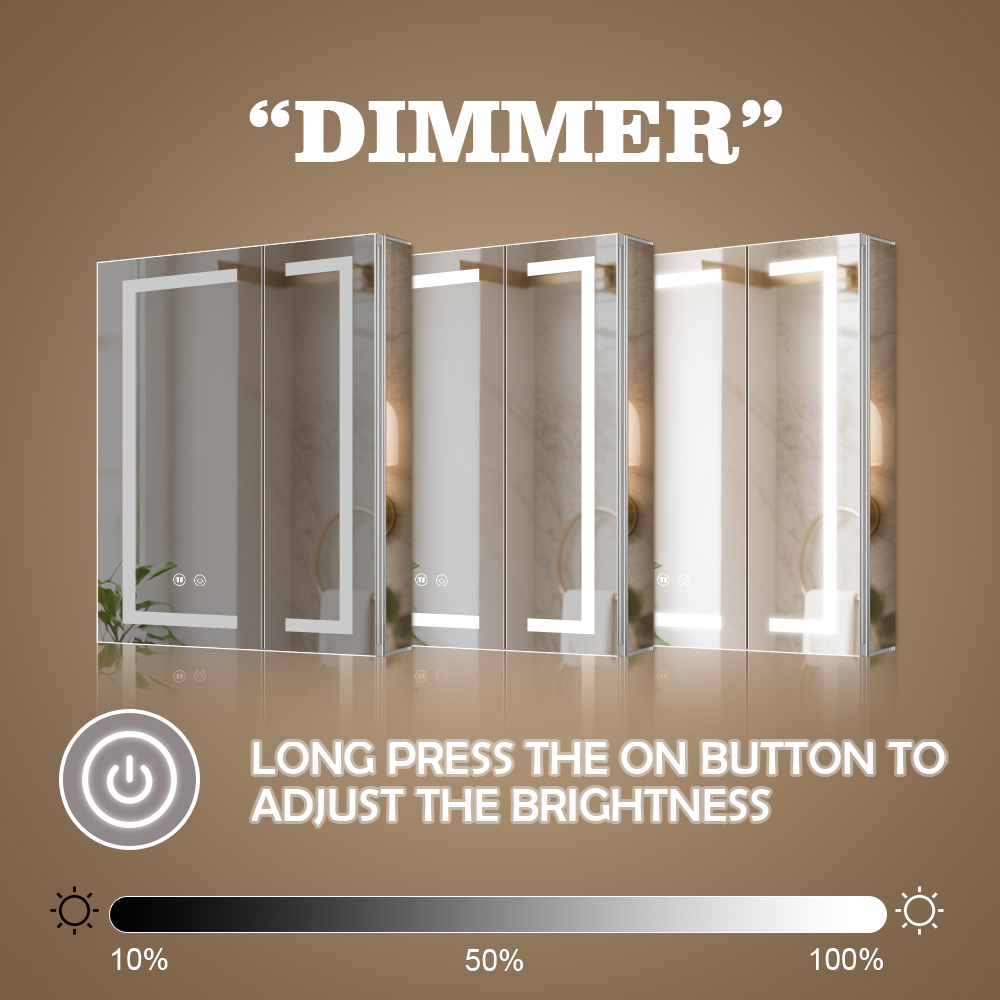
Current hospitality design trends emphasize personalized wellness spaces. This makes dynamic, high-quality lighting an absolute necessity rather than a mere upgrade. The primary function of the fixture is to provide optimal task lighting. Subpar illumination casts harsh, unflattering shadows or distorts skin tones, which directly impacts guest satisfaction.
Modern hotel design demands versatility to cater to diverse traveler needs. Integrating a 3CCT mirror cabinet (Correlated Color Temperature) allows users to seamlessly toggle between three distinct lighting modes via a built-in capacitive touch sensor:
Warm White (3000K): Ideal for evening relaxation, mimicking the soft, calming glow of traditional incandescent bulbs.
Neutral White (4000K): The gold standard for daily grooming, providing clean, natural light.
Cool White (6000K): High-contrast daylight illumination, perfect for precise makeup application or meticulous shaving.
In addition to adjustable color temperatures, you must evaluate the actual accuracy of the light. This is measured by the Color Rendering Index (CRI). For hospitality procurement, insist on a CRI of 90 or higher. Lower ratings will make skin tones appear washed out or grayish.
Specifically, verify the lumen output alongside the quality of the internal LED strips. Commercial units should utilize high-density SMD LED strips, featuring at least 120 LEDs per meter. These should be housed within frosted diffusers to eliminate glaring hotspots. Demand a manufacturer guarantee stating the LED lifespan exceeds 50,000 hours to minimize ongoing maintenance overhead.
Picture a guest stepping out of a steaming hot shower, rushing to get ready for an early business meeting. They wipe the glass with a hand towel, leaving frustrating streaks and creating unnecessary extra labor for your housekeeping staff. In a fast-paced hotel setting, back-to-back hot showers quickly render standard glass unusable due to heavy condensation.
An anti-fog mirror cabinet solves this issue by utilizing a specialized Polyethylene Terephthalate (PET) electrical heating pad adhered directly to the back of the glass. Upon activation, this pad gently warms the surface to just above room temperature—typically 15°C to 20°C above ambient. This subtle thermal shift prevents water vapor from condensing.
While defoggers are indispensable for guest comfort, they continuously draw electrical current (usually between 15W and 30W). If guests leave the defogger running indefinitely, it generates massive energy waste across hundreds of rooms. Therefore, when ordering in bulk, it is imperative to specify a built-in relay timer. An automatic shutoff feature that powers down the heating pad after 30 to 60 minutes protects internal components from overheating and slashes long-term utility expenditures.
The reflective glass itself is simultaneously the most visible and the most vulnerable component of the entire assembly. Procurement teams must rigorously scrutinize the glass manufacturing process to guarantee aesthetic longevity and uncompromising guest safety.
Historically, mirrors were manufactured using a traditional copper backing. Over time, relentless exposure to bathroom humidity and harsh commercial cleaning chemicals causes this copper layer to oxidize. This chemical reaction results in unsightly black edges, commonly known as "desilvering." To ensure commercial durability, explicitly specify 5mm copper-free silver mirrors. This modern manufacturing technique utilizes a specialized protective paint layer instead of copper, drastically improving resistance to corrosion.
Furthermore, hotel operators carry a strict duty of care for their patrons. If a guest slips and strikes the glass, standard untreated glass will shatter into dangerous, jagged shards. To neutralize this liability, every commercial unit must be treated with an explosion-proof (shatterproof) backing film. Functioning much like an automotive windshield, this heavy-duty adhesive layer ensures that if the glass breaks, the fragments remain firmly adhered to the film rather than raining down onto the floor.
A thoughtfully designed interior does far more than just reflect light. It optimizes spatial efficiency and directly addresses the practical, day-to-day needs of the modern traveler. When evaluating specifications, interior functionality is just as critical as exterior illumination.
Storage flexibility is paramount. Guests travel with a wide array of personal care items, ranging from tiny cosmetic jars to tall electric toothbrushes. Fixed shelving often leads to frustration. Instead, specify units equipped with adjustable tempered glass shelves. Tempered glass is highly hygienic, effortless for housekeeping to sanitize, and strong enough to bear significant weight safely.
Today's traveler relies heavily on an ecosystem of rechargeable devices. A premium bathroom mirror cabinet should act as a centralized, clutter-free grooming station. Standard specifications should mandate a dual-voltage shaver socket (110V/220V) to seamlessly accommodate international guests. Integrating waterproof USB and Type-C charging ports inside the cavity allows guests to charge smart devices safely away from the sink basin, reducing electrical hazard risks near running water.
Water and electricity are a dangerous mix. Because these fixtures introduce high-voltage electrical components into a fundamentally wet environment, strict adherence to international waterproofing standards is absolutely non-negotiable. Failure to specify the correct protective ratings can result in rapid component degradation.
Ingress Protection (IP) ratings define exactly how effectively an electrical enclosure seals out dust and moisture. IP44 protects against solid particles larger than 1mm and water splashed from all directions. This is the universally accepted minimum standard for bathroom "Zone 2" installations. For a standard wall-mounted vanity installation, an IP44 rating is generally sufficient and cost-effective. However, it is vital that this rating is certified by a legitimate, independent testing laboratory.
From an engineering perspective, the most critical electrical component is the LED driver. This power supply unit converts the building's AC mains voltage to the low-voltage DC required by the light strips. Drivers are notoriously sensitive to moisture. Procurement managers must verify that the driver and all wiring connections are housed within a fully sealed, IP-rated junction box inside the structural chassis.
The mechanical hardware is frequently the very first point of failure in commercial furniture. A door in a fully booked hotel room may be forcefully opened and closed thousands of times a year. When maintenance staff have to constantly realign sagging doors, operational costs skyrocket.
In a hospitality environment, acoustic control matters immensely. A heavy glass door slamming shut can startle the user and transmit noise through adjacent walls. To maintain a tranquil atmosphere, specify high-quality, hydraulic soft-close hinges. Leading commercial-grade hardware suppliers utilize integrated dampeners that catch the door's momentum, pulling it shut silently and smoothly.
Before authorizing a bulk purchase order, demand to see the hinge endurance testing data. While residential hinges might survive 15,000 cycles, commercial-grade hardware must be certified for a minimum of 50,000 to 100,000 open/close cycles without losing tension. Additionally, evaluate the opening angle. 165-degree wide-angle hinges allow the door to open almost completely flat against the wall, providing unimpeded accessibility.
As global supply chains become increasingly complex, regulatory bodies and insurance companies are tightening electrical compliance audits for commercial properties. Installing uncertified fixtures is no longer just a functional risk; it is a severe legal liability. The final step before procurement is auditing the manufacturer’s compliance documentation.
Electrical safety standards are strictly governed by geography. You must ensure the manufacturer provides valid, verifiable certification numbers tailored to your specific market. Look for UL or ETL listings for North America, CE marking and RoHS for Europe, and SAA approvals for Australia. Never accept "self-certified" claims. Always request the actual laboratory testing reports.
Commercial procurement requires strategic long-term risk management. Negotiate a robust commercial warranty of 3 to 5 years that explicitly covers the LED strips, drivers, defogger pads, and mechanical hinges. Equally important is the product's modularity. Ask the manufacturer if the electrical components feature a plug-and-play design for easy in-house replacement by your maintenance team.
Procuring the right LED Mirror Cabinet requires looking past sleek exterior designs and digging deep into the technical specifications. By insisting on rust-proof aluminum frames, dynamic 3CCT lighting, energy-efficient anti-fog capabilities, and robust safety certifications, you guarantee a high return on investment for your property.
Are you ready to elevate the bathrooms in your next hospitality development? Visit Kaitze today to explore our complete range of commercial-grade solutions, request a custom quote, and order a premium sample to test our engineering quality firsthand.
Standard widths typically range from 24 inches for a single vanity layout to 48 inches or more for double vanity suites. The depth is a highly critical dimension; it generally sits between 5 to 6 inches. This specific depth allows for adequate internal storage for guest toiletries without awkwardly crowding the sink area or interfering with the use of the vanity faucet. Custom sizing is also frequently utilized to perfectly match specific architectural layouts.
Aluminum is the superior choice for commercial wet environments because it is inherently 100% waterproof, rust-proof, and lightweight. In stark contrast, traditional wood or MDF is highly vulnerable to moisture. Despite protective coatings, the constant humidity and temperature fluctuations in a hotel washroom will eventually cause wood-based materials to swell, warp, peel, or harbor mold, leading to expensive premature replacements.
The term 3CCT stands for 3 Correlated Color Temperatures. A 3CCT system features advanced LED technology that allows the user to toggle between three distinct lighting temperatures: a warm white (around 3000K) for a relaxing ambiance, a neutral white (around 4000K) for natural daylight simulation, and a cool white (around 6000K) for precise tasks like shaving or makeup application. This adjustability significantly enhances guest comfort.
These units are designed to be highly energy-efficient. The internal PET heating pad typically consumes between 15W to 30W of power, depending on the total surface area of the glass. To optimize energy usage in a large-scale hotel setting, it is highly recommended to specify models equipped with an automatic shutoff relay. This feature powers down the defogger after 30 to 60 minutes, ensuring electricity is not wasted if a guest forgets to turn it off.
Yes, provided they meet strict commercial safety standards. High-quality cabinets utilize low-voltage DC power for the LED strips, minimizing shock risks. Additionally, they must feature an IP44 or higher waterproof rating to protect internal wiring from moisture and splashes. Always ensure the glass is treated with a shatterproof explosion film to protect guests in case of accidental breakage.
Premium commercial mirror cabinets are designed with modularity in mind. Instead of removing the entire heavy cabinet from the wall, maintenance staff can simply access the internal IP-rated junction box. The best manufacturers utilize plug-and-play wiring connectors, allowing a technician to safely swap out a faulty driver or LED strip in minutes without requiring specialized electrical tools.
Yes, the vast majority of reputable B2B manufacturers provide comprehensive OEM (Original Equipment Manufacturer) and ODM (Original Design Manufacturer) services for volume orders. Procurement teams can easily request custom laser-etching of the hotel's logo directly onto the glass. Additionally, manufacturers can tailor the interface of the digital touch display panels, adjust internal shelving configurations, and match exterior frame finishes to align perfectly with the brand's interior design guidelines.


